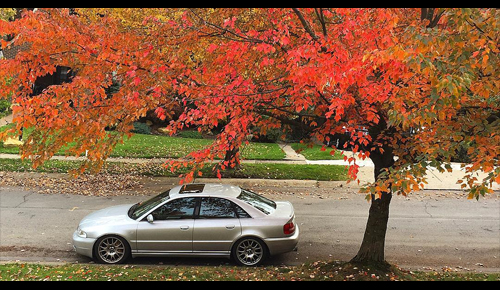
It's a 3.8L build with big valve/big port heads, race cams, 12mm head studs, AWIC system, C16, Tilton carbon clutch, big dick fuel system, and a pair of GT3586Rs. It puts down about 1250hp to the rear wheels.
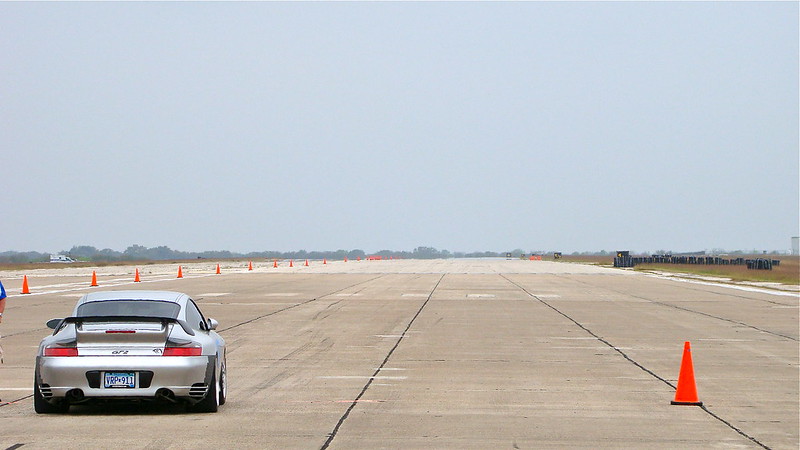
The first owner sold it to get a UGR Gallardo. The second owner was a serious half mile and mile racer, and racked up a number of wins with the car. This is a lower power car in that world, but it was sorted, very punchy, and hooked up well which is all that matters sometimes:
They also went to the Texas Mile, where it was gearing limited and hit 217mph at the 3/4mi marker, unable to accelerate any further.
The second owner sold the car again (he upgraded to a UGR Gallardo), this time to a well known dealer in Texas. This owner held on to it for a short period of time before selling it again, this time to a customer in North Carolina. Before shipping it to him, he sent it to us to be redynoed and make sure everything was tip top.
We went through the car, doing a full service with a compression and leakdown test and putting a fresh set of NGK Racing plugs in (they last a couple hours per set before fouling; they are a super cold heat range). The car then hit the dyno to make sure it was running well. Unfortunately, we found that with the boost turned up it was misfiring around 6500rpm. After some testing, our engine builder John Bray concluded it was a mechanical issue and the motor had to come apart. It was found that the valve springs were down on seat pressure, likely due to hours and maybe a mechanical overrev here and there (see: racing history). A top end rebuild and bottom end refresh commenced, and this past week/weekend I had the honor of watching the process of a master at his craft assemble a Porsche GT1 motor.
It turns out this motor is pretty damn complicated and labor intensive to build. On top of the large amount of critical blueprinting and setup required to build a motor that makes this much power, reliably, for four seasons of abuse, just bolting the thing together with all the pieces inside is not a walk in the park.
It starts with the case. The two halves form the main bearing journals, and the crankshaft (with rods installed), intermediate shaft, timing chains, and oil pump are installed in place. 16 main bolts (which are about 10" long) and about two dozen 8mm studs hold the case together. We pin the mains to keep them from moving in high power applications.

The next step is the cylinders and sleeves. There is a cylinder housing which holds the three sleeves per bank and circulates coolant around them. The sleeves in this application are custom, ~2mm larger bore and ductile iron vs. alusil stock. They drop into place, no machinework necessary. Getting the cylinders and pistons installed is the biggest pain in the ass of the whole process. The pistons are installed in the liners, then the assembly is moved near the rods so the wrist pins can be put into place. The order in which this all occurs, and the room to work is minimal. John has built dozens of these motors and it took him a good portion of the day to get the pistons and cylinders installed.
Once the bottom end is together, the heads are installed using a set of custom head gaskets and uber-grade tool steel 12mm studs. We developed our own hardware for these studs, as we found the normal stuff from ARP, Raceware, etc. isn't good enough. The heads are CNC ported and feature massive valves. Porsches run very undersquare; this engine has a 102mm bore and 76mm stroke. It lets you run huge valves compared to VAG stuff, which makes everything breathe very nicely. The valves, springs, and retainers are Ferrea parts designed to our specs.

Once the heads are on, you still have to install the cam towers. The cam towers house the lifters, camshafts, and variable cam timing and variable valve lift solenoids and passageways.

The variable valve lift setup is kind of cool. It functions similar to VTEC, where there are two completely separate intake cam lobes, driven by a two-piece lifter. When the high lift is switched off, the outside lobes press on a part of the lifter that is not directly connected to the valve, so the valve is only actuated by the very small lift, small duration center lobe. When the high lift is engaged, oil pressure moves a pin in the lifter, which locks its two sections together, and suddenly the valve is actuated by the high lift lobe. The high lift lobe is over 300 degrees duration, similar to the exhaust cam lobes (which are conventional). The lifters are stock, and hydraulic. The cam phasing is also adjustable. Rev limit is 7800rpm.

John worked over the weekend to get the engine assembled and all the accessories installed. It went in the car today, and hit the dyno tonight for break-in. I had to head home before he leaned on it, but it was running well when I left. The car runs 36psi in the higher gear, peak boost map. Powerband is from around 4500-7600rpm.


Assuming it puts down the number, it gets loaded on a truck Wednesday and off to seriously terrorize the roads of NC. Next project is a 680hp turbo kit and basic motor build (necessitated by an internal problem on the stock motor), a built transmission in an 850hp 997TT, and then tuning on our shop car and a 997TT, both of which are being prepped for the No Fly Zone event in AZ December 13-14 (www.omegamotorsport.com). Both cars should be over 1600whp in kill mode.
So yeah. Pretty cool stuff to check out on a daily basis
 .
.Sam